
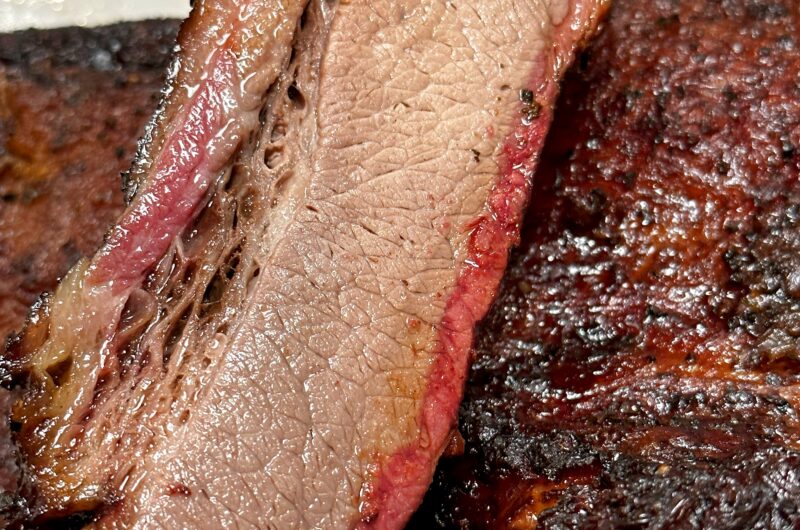
(It Might Be Your Knife, Not Your Smoker)
You’ve done everything right. You bought a good brisket. You seasoned it. You tended the smoker for hours. You waited patiently for it to get tender, let it rest, and finally carried that beautiful brisket over to the cutting board.
Then somebody takes a bite and says: “It’s a little chewy.” Ouch.
Before you blame the brisket—or worse, your smoker—take a look at what happened on the cutting board. Because you can cook a wonderfully tender piece of meat and make it seem surprisingly tough simply by slicing it the wrong way.
The secret is simple: Slice against the grain.
And while we’re talking about brisket, this rule applies to just about every piece of meat you put on your smoker.
What Does “Against the Grain” Mean?
The “grain” is simply the direction in which the muscle fibers run through a piece of meat. Look closely at an uncooked steak or roast, and you’ll usually see lines running through it. Those are bundles of muscle fibers.
If you slice with the grain, you’re leaving those fibers relatively long. When you take a bite, your teeth have to do the work of breaking those long fibers apart.
Cut across the grain, however, and your knife does much of that work before the meat ever reaches your mouth. The fibers become shorter. The bite becomes easier. And the exact same piece of meat suddenly seems considerably more tender.
That’s why slicing isn’t merely something you do after cooking. Slicing is the final step of cooking.
Why Brisket Can Be Tricky
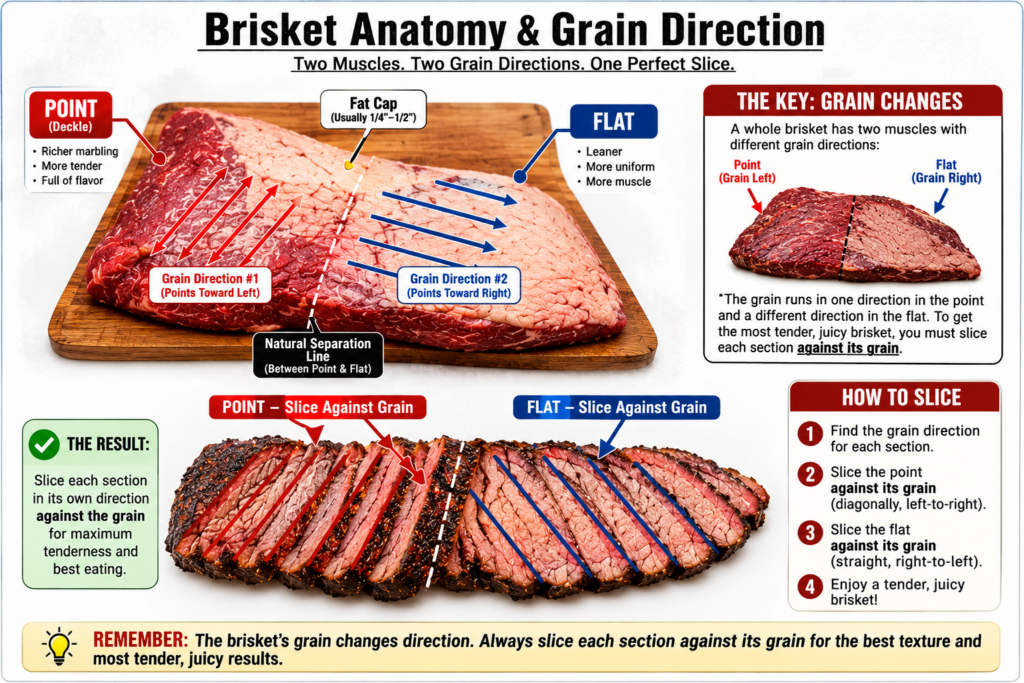
Brisket makes this a little more interesting because a whole packer brisket contains two different muscles: the flat and the point.
And their grain doesn’t necessarily run in exactly the same direction.
That’s one reason I like to pay attention to the grain before the brisket ever goes onto the smoker. It’s much easier to see which way those fibers are running when the meat is raw than after you’ve spent hours building a beautiful dark bark over them.
One simple trick is to make a small cut or notch at the end of the brisket before seasoning it. That gives you a visual reminder of the direction you’ll want to slice once the brisket is cooked.
When it’s finally time to eat, use a good sharp brisket slicing knife and cut across those fibers rather than following them.
You haven’t changed the brisket. You’ve changed how much work your teeth have to do.
Looking for an easy-to-follow approach to cooking succulent smoked brisket? Check out these related posts…
The Ultimate Yoder YS640s Brisket Guide.
Don’t Ruin Your Leftover Brisket!
Tri-Tip: The King of Grain Problems
If brisket can fool you, tri-tip can really make you look bad. In fact, the first time I posted a tri-tip photo many years ago, I am ashamed to say it was sliced very wrong and one of my SmokeyGood site visitors was kind enough to let me know.
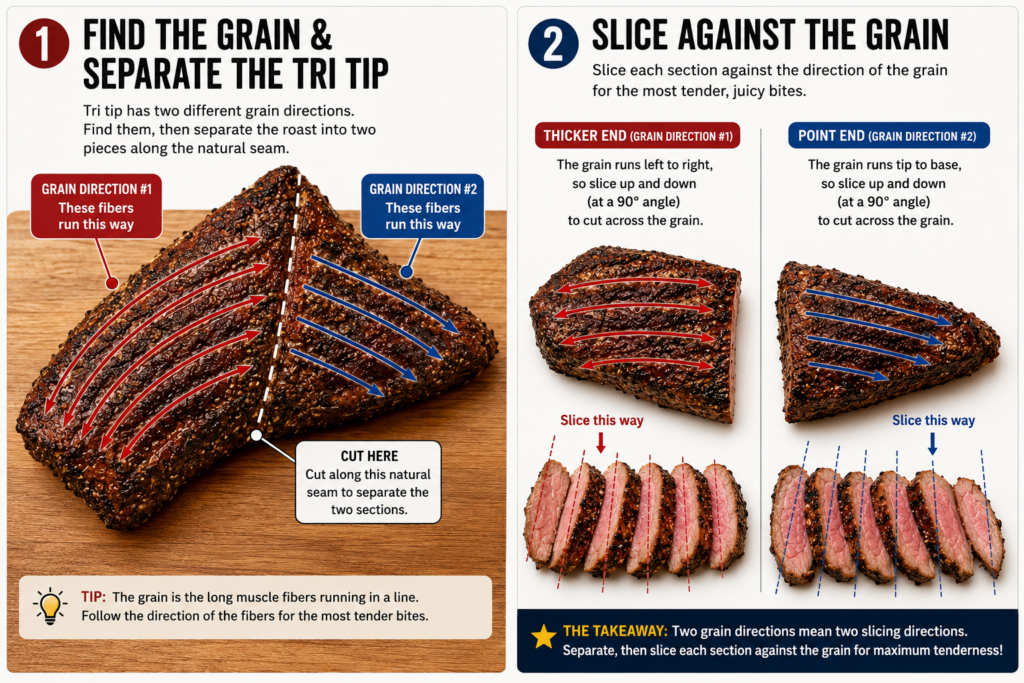
In fact, tri-tip may be the king of all grain problems. The grain actually changes direction within the roast.
That means you can be happily slicing perfectly against the grain and then, without realizing it, find yourself slicing the other half almost directly with the grain.
Same tri-tip. Same cook. Same internal temperature.
Yet one slice can seem wonderfully tender while another seems inexplicably chewy. The solution is easy once you know what’s happening.
Before cooking your tri-tip, take a moment to study the grain. Notice where the direction changes. After cooking and resting it, you can divide the roast around that transition and then rotate the pieces as necessary so you’re always slicing across the fibers.
If you’ve ever wondered why some pieces from the same tri-tip seemed more tender than others, this may very well be the reason.
Would you like to learn more about the ultimate technique for cooking a tri-tip? Check this out!
As an Amazon Associate and brand partner, I earn from qualifying purchases.
A Few Tools That Make Slicing Easier
You don’t need a drawer full of special barbecue gadgets to slice meat properly. But a few good tools make the job considerably easier.
- A Sharp Brisket Slicing Knife: A long blade lets you make smooth slices without sawing back and forth through that bark you worked so hard to create.
- A Large Cutting Board: Briskets and tri-tips need room. This is a must when carving large cuts or when you are smoking multiple cuts during a cook.
- A Precision Instant-Read Thermometer: It won’t tell you which way the grain runs, but getting the meat properly cooked and tender in the first place is still step one.
It’s Not Just Brisket and Tri-Tip
The same principle applies to many of the meats we cook. Did you know that most people still carve a chicken or turkey breast with the grain instead of against it?
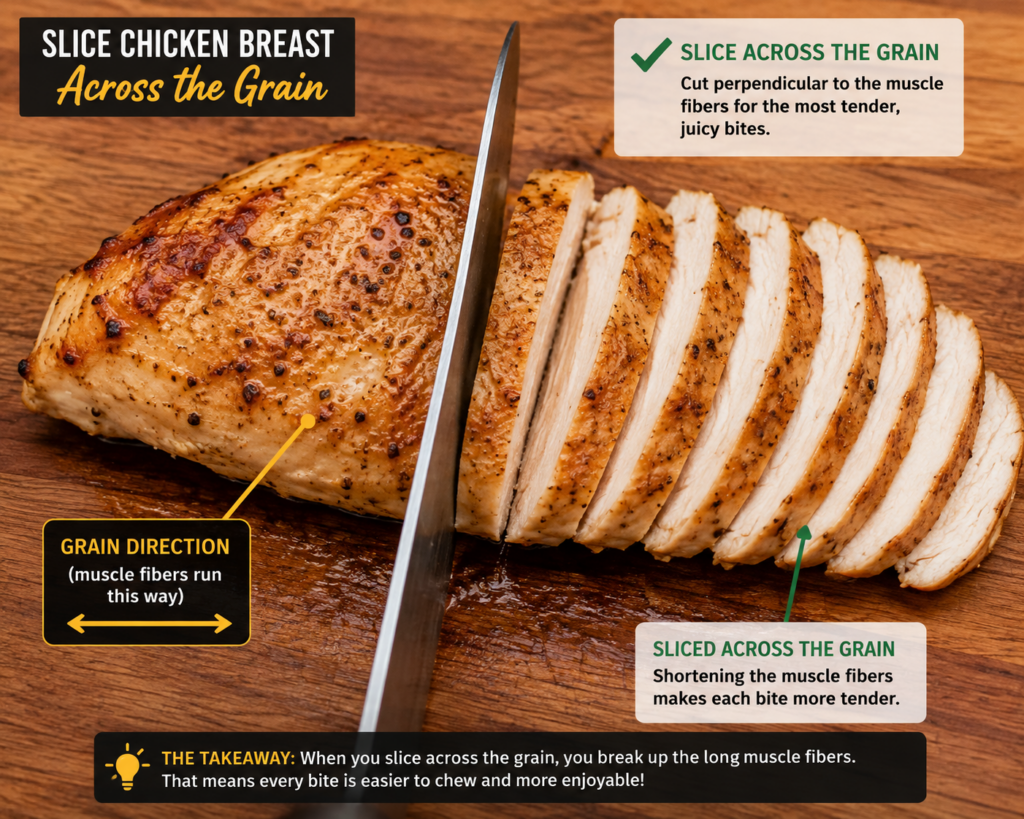
Flank steak, skirt steak, chuck roast, pork loin, and other cuts all have muscle fibers that can affect how tender they seem when you eat them.
Some cuts make the grain obvious. Others make you hunt for it. But the principle remains the same:
Long fibers make your teeth work harder. Short fibers make meat easier to chew.
Whenever you’re about to slice a piece of meat, take a few seconds before you start cutting. Find the grain. Then turn your knife so you’re cutting across it.
Looking for a great side dish for this yummy tri-tip? How about some Spicy Southwest Chipotle Coleslaw.


Published by SmokeyGood
Recent Comments