
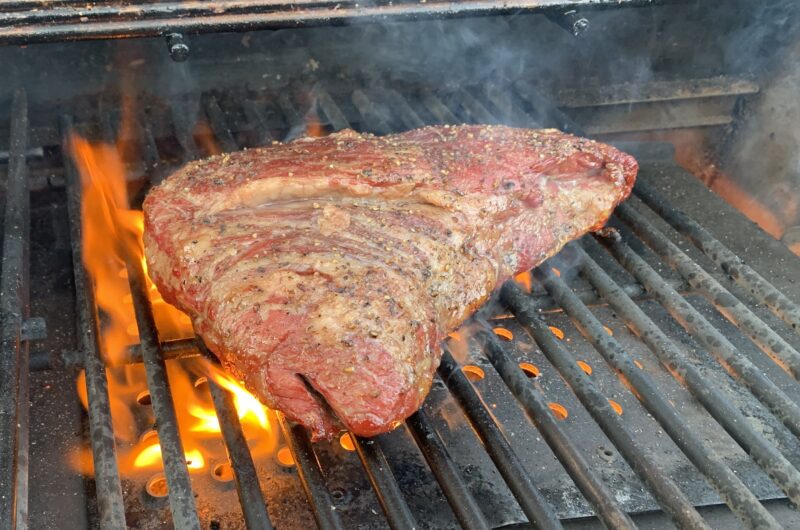
(Smoke Low, Finish Over Open Flame) (Updated August 2026)
Tri-tip and the reverse sear were made for each other.
The idea is simple. Smoke the roast slowly until it is approaching your preferred doneness, then finish it over very high heat to develop the browned, lightly charred exterior that low-temperature smoking alone can’t produce.
You get the best of both worlds: wood-smoked flavor and even cooking on the inside, followed by the flavor and crust of grilling over a hot fire just the way it was done in the early days of the American West. I spent some time living on the Central Coast of California, near the city of Santa Maria, and tri-tip is everywhere. I began to wonder about the history of it – maybe you would like to read about it too! Check out how the ranch hands would cook their beef out on the ranch over their local red oak – yes – Flame Grilling!
These days I try to replicate that smokey, beef flavor for my family and friends at home. I smoke the tri-tip on my Smoker Pan System, then move it directly over the open flame on my Yoder YS640s for the finish.
Low and slow first. Fire at the end. That’s my kind of pellet-grill cooking.
[As an Amazon Associate and brand partner, I earn from qualifying purchases]
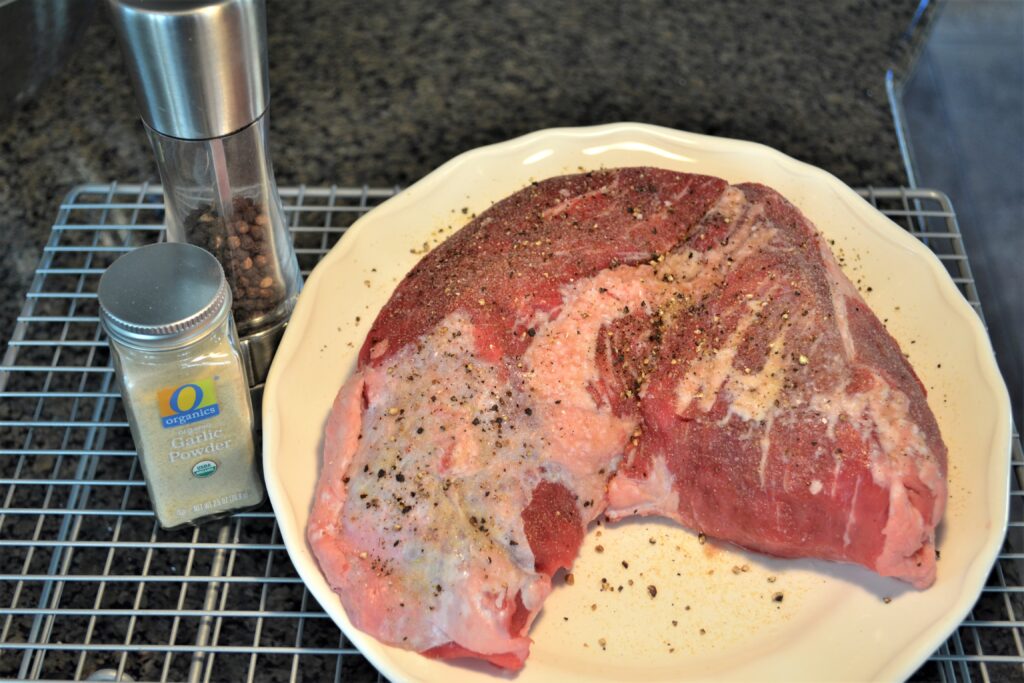
Start With a Dry Brine
Tri-tip doesn’t need much help. I like to salt the roast the day before cooking and leave it refrigerated overnight. This gives the salt time to work its way into the meat and season it more thoroughly than simply salting the surface immediately before cooking.
If you haven’t tried this before, take a look at my Dry Brining and Why article for a little more background.
Before the tri-tip goes into the smoker, add whatever additional seasoning you prefer. A favorite beef rub works well, but there’s nothing wrong with keeping things simple. Garlic powder and plenty of freshly ground black pepper make a very good tri-tip.
Smoke the Tri-Tip
Preheat the pellet grill to 250°F.
Oak is a natural choice with beef, although this isn’t a cook where I’d lose much sleep over the exact wood pellet. Use a good-quality hardwood pellet you enjoy.
Today I smoke the tri-tip on my Smoker Pan System—a wire rack nested inside a foil-lined half-sheet pan. The rack keeps the meat elevated so heat and smoke can circulate around it while the pan catches the drippings below. It also makes cleanup considerably easier, which is never a bad thing.
Place the seasoned tri-tip on the rack and insert a temperature probe into the thickest part of the roast. Then let the smoker do its job. We’re not trying to finish the tri-tip at 250°F. We’re using this first stage to cook it gently, develop some smoke flavor, and bring the interior temperature up gradually before the high-heat finish.
I start thinking about the sear when the internal temperature reaches roughly 100°F.
Don’t get too hung up on the clock. Tri-tips vary considerably in thickness, and thickness matters much more than weight when estimating cooking time. Cook to temperature, not time.
Now Comes the Fun Part: Open Flame
This is where the reverse sear earns its name—and where a pellet grill capable of direct-flame cooking becomes especially interesting.
My Yoder YS640s can be configured so the food cooks over the actual pellet fire. I remove the tri-tip from the smoking setup, configure the Yoder for open-flame grilling, and get the searing surface very hot.
If you’re unfamiliar with the setup, see my How to Flame Sear on a Yoder YS640s guide. It walks through the process.
Then the tri-tip goes over the fire. This part happens quickly.
Sear one side until you’ve developed the color and char you’re looking for, then flip it. Don’t forget the edges—the unusual triangular shape of a tri-tip gives you plenty of surface area worth browning.
And keep an instant-read thermometer close. Once you move from a 250°F smoker to intense direct heat, the internal temperature can climb quickly. This is not the time to wander into the house looking for another beer. Check the temperature frequently and pull the roast according to the doneness you actually want.
Carryover cooking will continue after the meat leaves the heat, but don’t assume it will always rise by some magic fixed number of degrees. The amount depends on the size of the roast, how aggressively you’ve seared it, and how hot the exterior has become.
Use the thermometer—and your judgment.
No Open-Flame Pellet Grill? No Problem
Open flame is my preferred finish today, but you don’t need a Yoder to reverse sear a tri-tip.
A very hot cast-iron skillet works. So does a gas grill. You can even use a charcoal grill if that’s what you have available.
The important part isn’t the equipment. It’s the change in cooking method: gentle indirect heat first, intense direct heat second. That’s the reverse sear.
Give It a Short Rest
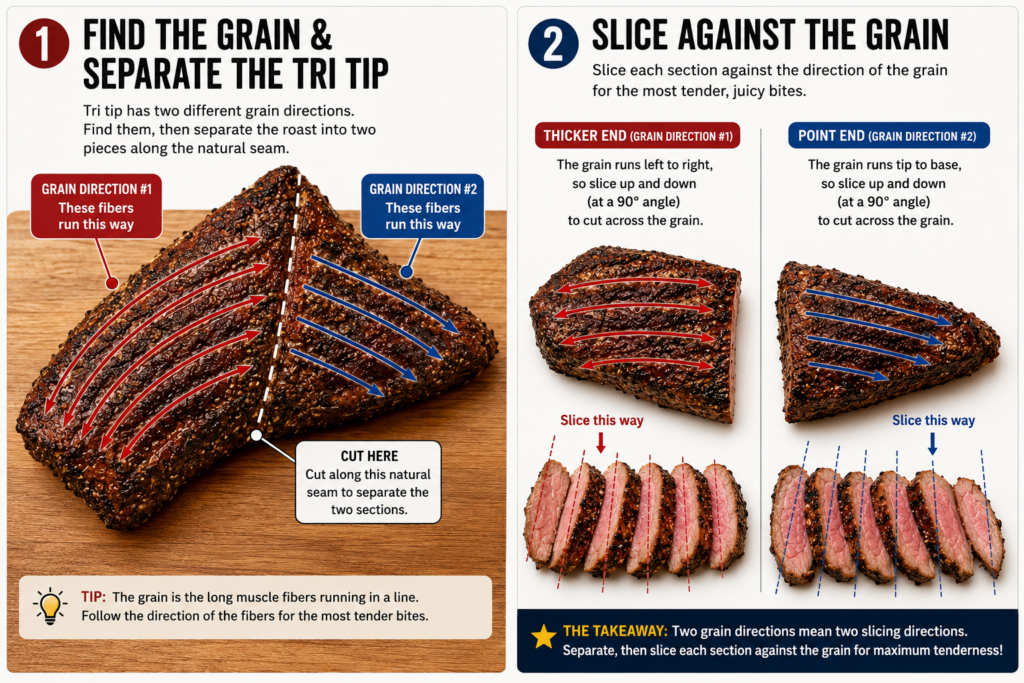
Once the tri-tip reaches your desired temperature, remove it from the heat and give it a short rest before carving. Then comes one of the most important parts of cooking tri-tip: Pay attention to the grain.
Tri-tip is unusual because the direction of the muscle fibers changes across the roast. If you simply start slicing at one end and continue straight through, part of the roast can end up sliced with the grain and seem considerably tougher than it really is.
Look carefully at the grain before you start cutting. Divide the roast where the grain changes direction if necessary, then slice each section across the grain.
It makes a remarkable difference.
Why Reverse Sear Works So Well for Tri-Tip
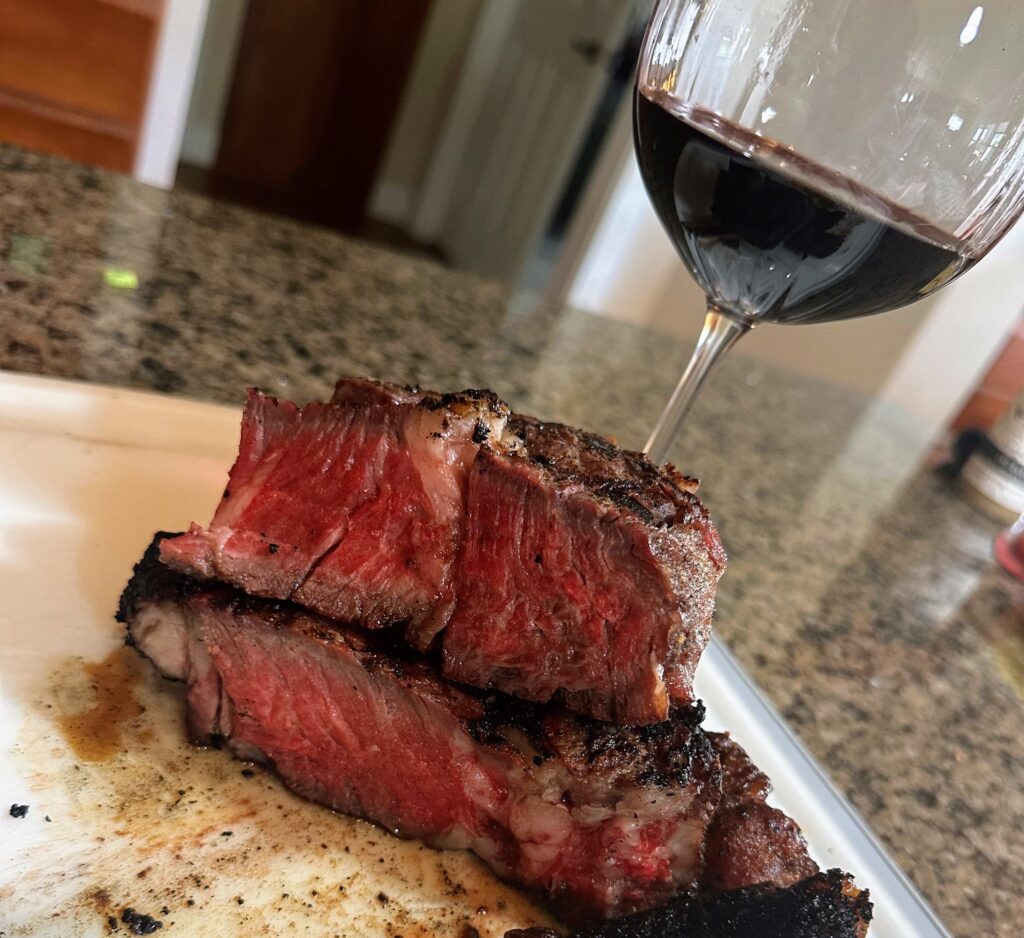
A tri-tip is thick enough to benefit from slow, controlled cooking but still small enough to finish beautifully over high heat. Smoking first gives you time to develop wood-fired flavor without badly overcooking the outside of the roast. The final sear supplies what the smoker can’t: intense surface browning and a little char.
For me, it’s also a great example of what makes a pellet grill so versatile at open-flame cooking. I can smoke the tri-tip gently on the same cooker and then finish it directly over the pellet fire.
One grill. Two very different kinds of heat.
And one very good piece of beef. Speaking of good beef – have you ever tried smoking plate ribs? These are beef like you have never tasted before…How to Smoke Beef “Dino” Plate Ribs.
How about some coleslaw with a punch to go along with that beefy tri-tip? Check this recipe out.
Spicy Southwest Chipotle Coleslaw.


Published by SmokeyGood
Recent Comments