
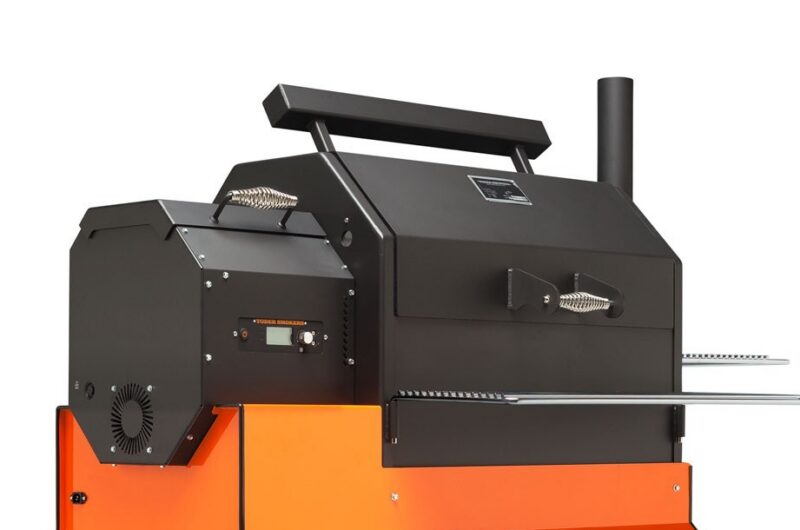
When you wander through the backyard cooking section of a big-box retail store, every pellet grill starts to look the same. They feature the same black-painted barrels, the same thin metal lids, and lightweight handles that feel like they belong on a kitchen appliance.
But if you ever step up to a premium cooker—like the legendary Yoder Smokers YS640s—one massive, unmissable feature immediately jumps out at you: a heavy, solid-steel cylinder welded directly to the front of the grill lid.
That steel bar is a lid counterweight.
If you look at your current backyard setup, your grill lid almost certainly doesn’t have one. Here is the engineering secret behind why high-end cookers require a counterweight, and why mass-market manufacturers completely leave them off.
[As an ATBBQ brand partner and Amazon Associate, I earn from qualifying purchases]
1. The Physics of 10-Gauge American Steel
The main reason your current grill lid doesn’t have a counterweight is simple: its lid is made of thin, cheap sheet metal.
Standard mass-market pellet grills are manufactured overseas using thin-gauge steel to save on shipping costs and production overhead. Because their lids are lightweight, any amateur can lift them open with a single finger.
The Yoder YS640s is built in Kansas out of 10-gauge structural American steel. The lid alone weighs more than many entry-level grills combined. Without a counterweight, opening that thick steel door would feel like a workout, requiring significant upper-body strength just to check on your chicken or ribs.
The counterweight acts as a physical fulcrum. It shifts the center of gravity backward, allowing you to lift a massive, industrial-grade steel door smoothly and safely with a single hand.
2. The Cooking Secret: The “Thermal Battery” Effect
You might wonder: Why build a lid that heavy in the first place if you just have to weld a counterweight on to make it liftable?
The answer comes down to thermal mass. Thin metal grill lids lose heat instantly the second the outside wind blows, or a drop of rain hits the cooker. When your grill loses heat, its computer brain panics, forcing the hopper to dump excess pellets into the firepot to recover. This leads to massive temperature swings, wasted fuel, and dry meat.
A thick steel lid acts like a thermal battery. It absorbs the intense heat of the firebox and locks it inside the cooking chamber.
- It creates a rock-solid cooking environment that isolates your meat from external weather.
- It ensures your pellet consumption remains completely steady, regardless of the weather.
3. The Smoke Seal vs. The “Leaky Lid”
Have you ever noticed smoke billowing out of the sides and corners of a standard pellet grill lid instead of exiting cleanly through the smokestack? That is because thin metal lids warp easily under intense heat cycles, creating uneven gaps.
The immense weight of a Yoder steel lid—perfectly balanced by that front counterweight—creates a heavy, natural compression seal against the grill frame. This massive weight forces the delicious wood smoke to stay trapped inside the chamber, rolling over your brisket or pork shoulder before exiting cleanly through the designated exhaust pipe.
The Verdict: What is Your Handle Attached To?
Ultimately, a lid counterweight is a visual badge of honor. It is an immediate structural indicator that you aren’t cooking on a disposable appliance designed to last three seasons before rusting through. It proves the manufacturer invested in heavy-duty raw materials designed to hold heat perfectly and last a lifetime.
If your current grill lid doesn’t have a counterweight, it’s because the manufacturer didn’t use enough real steel to justify one.
When you are ready to stop fighting temperature swings and upgrade to a heavy-duty American thermal battery, skip the mass-market options.
👉 [Check Out the Fully Balanced Yoder YS640s Build Options at All Things Barbecue]
Published by SmokeyGood
Recent Comments