
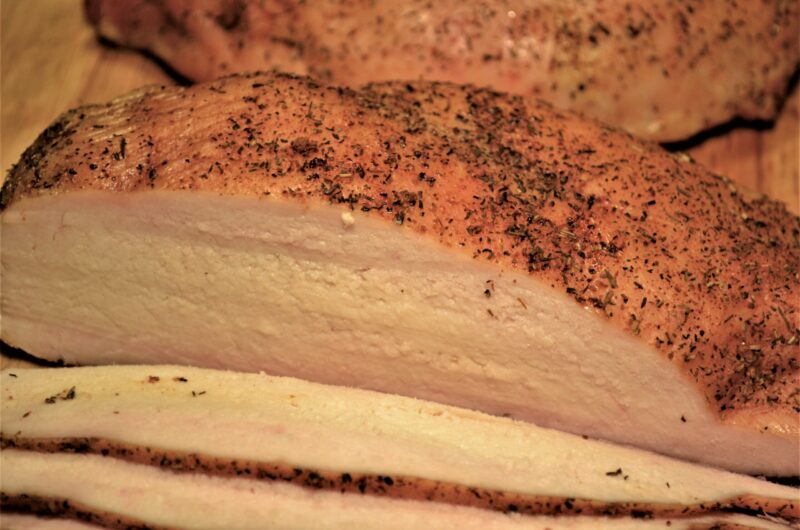
(The Ultimate Juicy Chicken)
Chicken is easily the most popular meat to throw on a backyard pit, but it is also the most notoriously difficult to get right.
If you treat a lean, skinless chicken breast the exact same way you treat a rich, bone-in chicken thigh, you run into a classic barbecue trap. White meat and dark meat have completely different physical structures and require separate internal targets to achieve juicy perfection.
You don’t need two separate cooks to solve this dilemma. By mastering a simple dual-stage timeline at a steady 250°F on your pellet grill, you can smoke an entire platter of chicken breasts and thighs simultaneously without drying out a single bite.
Here is my foolproof, dry-brined blueprint to getting perfect backyard chicken every single time.
[As an Amazon Associate and brand partner, I earn from qualifying purchases]
The Pitmaster Chicken Toolkit: What You Need
Because chicken can transition from juicy to bone-dry quickly, precision hardware is your absolute best insurance policy:
- The Pan & Rack System: A commercial baking sheet lined with Reynolds Pitmaster Heavy Duty Foil and a nested Stainless Steel Nesting Wire Rack. This catches all rendering chicken fat to keep your factory grates clean while allowing smoke to circulate 360 degrees under the meat.
- A Precision Instant-Read Thermometer: For validating your exact, separate internal targets across both cuts of meat.
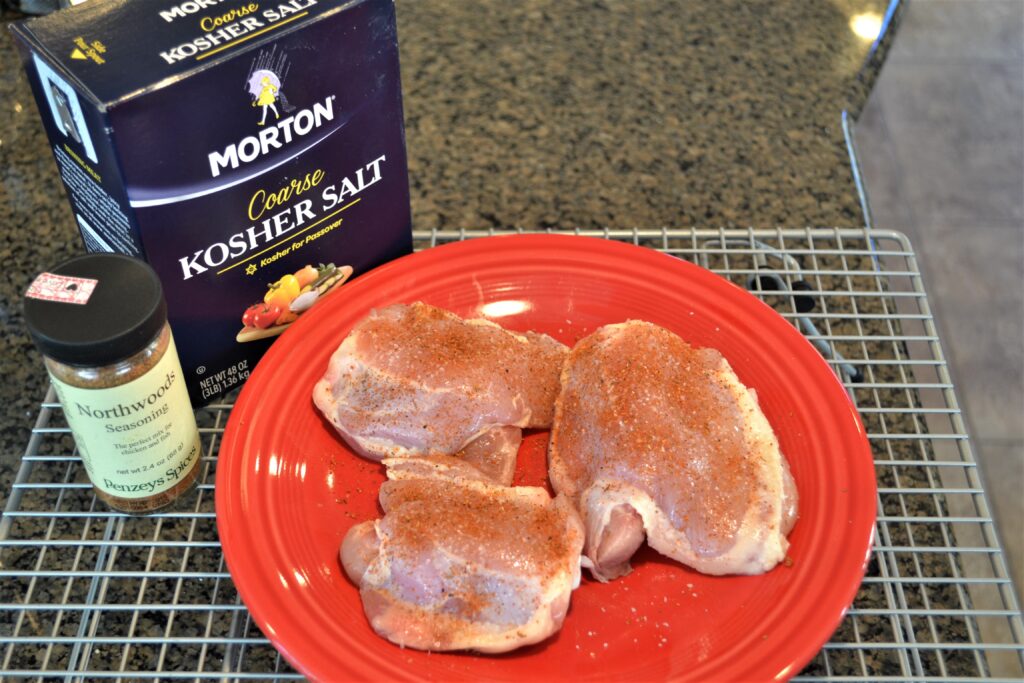
Step 1: The Overnight Dry Brine
To guarantee your lean chicken breasts stay completely juicy under a wood fire, you need to use the overnight dry brine method.
- Lay your chicken breasts and thighs flat onto your stainless steel nesting wire rack.
- Apply a uniform, light dusting of coarse Kosher salt across all sides of the meat.
- Slide the entire pan assembly into your refrigerator completely uncovered overnight.
The salt draws internal moisture out, dissolves, and re-absorbs deep into the muscle fibers to relax the proteins. Simultaneously, the refrigerator air dries out the surface skin, which is the secret to preventing rubbery skin tomorrow.
Step 2: The Morning Seasoning
The next morning, remove the dry-brined chicken from the refrigerator. You will notice the surface moisture has completely vanished.
- Give the meat a light coat of Pam Cooking Spray or a brush of olive oil to act as your rub binder.
- Apply a healthy coating of your favorite sweet poultry rub or a classic garlic-and-herb seasoning blend across all sides of the chicken.
- Let the meat sit at room temperature for 20 minutes to take the refrigerator chill off before cooking.
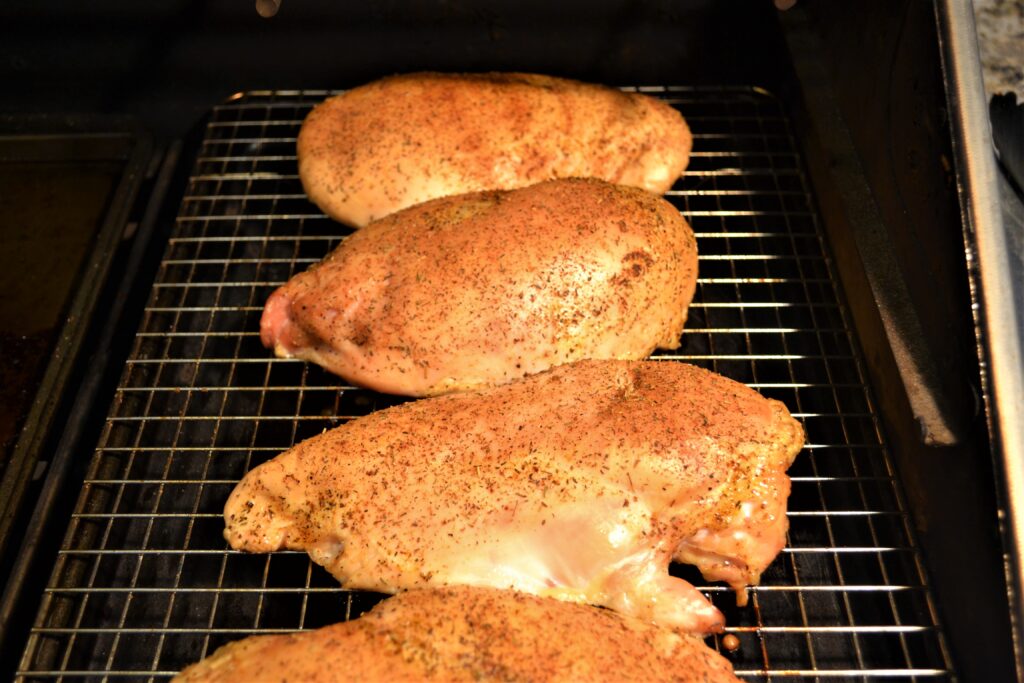
Step 3: The 250°F Clean Smoke Phase
Fire up your pellet grill and preheat it to 250°F (121°C) using a sweet, delicate fruitwood pellet blend like Apple, Cherry, or Pecan.
- Set your entire pan and wire rack assembly flat onto your grill grates.
- Close the heavy lid and let the wood smoke go to work. Keep the grill locked at a steady 250°F to ensure maximum smoke absorption.
- Monitor your core temperatures using your Instant-Read Meat Thermometer.
Step 4: The Dual-Stage Pull
Because white meat and dark meat render differently, use your thermometer to execute this simple, two-stage pull strategy:
- The Chicken Breast Pull (160°F): Probe the thickest center part of the white breast meat. The exact second it reads 160°F (71°C), lift the breasts off the rack and transfer them to a platter to rest under a sheet of foil. Carryover heat will safely bring them to 165°F while locking in every drop of juice.
- The Chicken Thigh Finish (175°F): Leave your chicken thighs on the smoker! Dark meat thrives at higher internal temperatures. Let the thighs continue cooking at 250°F for an extra 15 to 20 minutes until their internal temperature climbs to 175°F (79°C). This allows the internal fat and collagen to fully melt, yielding incredibly tender meat.
Pull the thighs, let the platter rest for 5 minutes, and serve!
How about some Yummy Pulled Pork?
Looking for a great ending for your SmokeyGood main course?
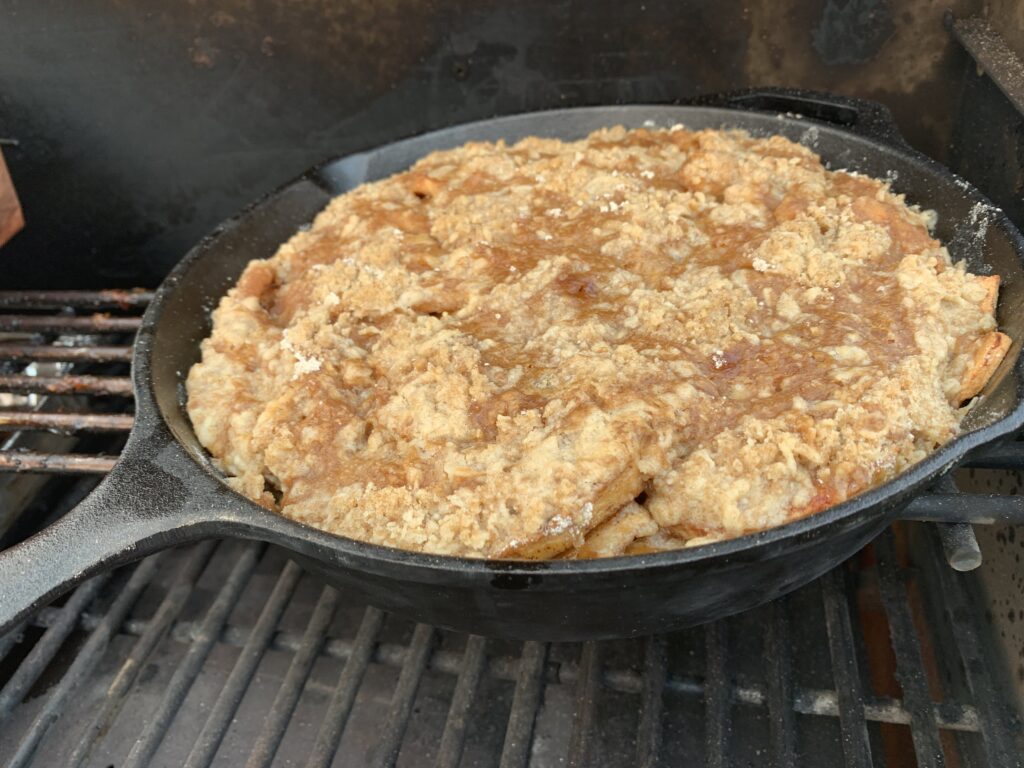
Check this out! Smoked Cinnamon Apple Crisp.
Published by SmokeyGood
Recent Comments